Michael J. Fox: The Man Who Outran Time — How 'Back to the Future's Hero Turned a Terminal Parkinson's Diagnosis into a $2 Billion Medical Crusade

1. The Boy Who Owned the 1980s: The Skateboarding Time-Traveler
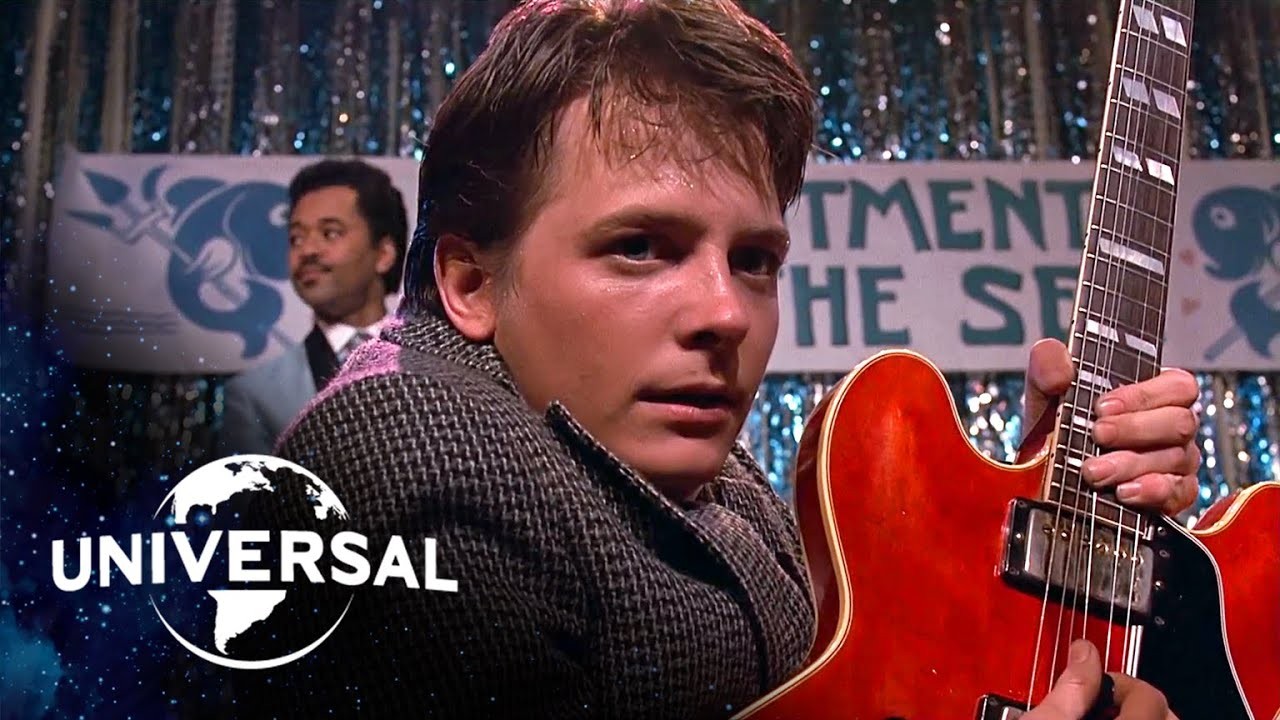
In July 1985, a cultural lightning bolt struck American cinema when Robert Zemeckis and executive producer Steven Spielberg released Back to the Future. Clad in an orange down vest, high-top sneakers, and clutching a skateboard, seventeen-year-old Marty McFly hopped inside a stainless-steel DeLorean time machine and raced straight into the pantheon of cinematic mythology. The young actor embodying that infectious, razor-sharp kinetic energy was twenty-four-year-old Canadian native Michael J. Fox.
His ascent to superstardom was an athletic feat of pure willpower. Fox famously pulled grueling twenty-hour workdays for months: shooting his Emmy-winning role as conservative teenager Alex P. Keaton on the sitcom Family Ties by day at Paramount, then rushing across town to Universal Studios to shoot Back to the Future through the dead of night until dawn. The trilogy grossed $970 million worldwide ($1.3 trillion KRW), redefining Hollywood summer blockbuster entertainment and establishing Fox as the most universally adored actor of his generation.
With three consecutive Emmy Awards and a Golden Globe, Fox wielded Hollywood at his fingertips. He possessed comedic timing comparable to Buster Keaton and Cary Grant, transitioning seamlessly into major cinematic comedies like The Secret of My Success and gritty dramas like Casualties of War. But as the decade turned, an invisible, devastating fate was preparing to strike.

2. The Devastating 1991 Diagnosis: Seven Years of Hidden Agony
One morning in 1991, while filming the romantic comedy Doc Hollywood in rural Florida, Fox awoke to a peculiar sensation: the pinky finger on his left hand was twitching rhythmically, entirely outside his conscious control. Initially dismissing it as physical exhaustion or nerve strain from a restless night, he was alarmed when the tremor persisted for weeks and slowly migrated into his wrist.
He consulted a leading neurologist in Manhattan. The clinical verdict shattered his universe: "You have early-onset Parkinson's disease. You have perhaps ten working years left before motor function degrades completely." Fox was just twenty-nine years old. Parkinson's, a progressive neurodegenerative disorder caused by the catastrophic loss of dopamine-producing brain cells, was widely perceived as an affliction exclusively targeting the elderly.
Paralyzed by existential terror and convinced his Hollywood career would instantly vanish if the truth surfaced, Fox initially retreated into self-destructive isolation and heavy alcohol use. Yet guided by the fierce, unwavering love of his wife, actress Tracy Pollan, he achieved sobriety and made a defiant vow. For seven years, Fox hid his condition from the public, meticulously timing dopamine-boosting medications to suppress tremors and keeping his left hand buried in his trousers while headlining the hit television sitcom Spin City.
💰 Quantitative Ledger: Box Office Glory, Secret Earnings & $2 Billion Philanthropic Impact
3. The 1999 Congressional Testimony: The Unmedicated Truth That Changed American Medicine
By 1998, with the disease progressing and medication windows narrowing, Fox chose to seize control of his narrative. He went public on the cover of People magazine, triggering an outpouring of international sympathy. But Fox had no intention of accepting passive victimhood. On September 28, 1999, he walked into the Dirksen Senate Office Building to testify before the U.S. Senate Appropriations Committee.
In an act of supreme moral courage, Fox intentionally refrained from taking his prescribed Sinemet medication prior to taking the witness stand. Before a battery of television cameras, his entire physical frame shook violently with severe dyskinesia. Senators and spectators sat frozen in stunned silence. But Fox’s voice never wavered: "What you see today is the daily reality for hundreds of thousands of Americans living with Parkinson's. The science is on the threshold of monumental breakthroughs, but it is starving for capital. Do not let politics delay the cure."
The visual impact of that testimony sent shockwaves through Washington. Congress immediately responded by authorizing massive federal budget increases for neurological and embryonic stem cell research. In 2000, Fox announced his retirement from full-time acting to launch the Michael J. Fox Foundation for Parkinson's Research (MJFF).

4. The $2 Billion War Chest and the Historic 2023 Biomarker Breakthrough
Over the next quarter-century, the Michael J. Fox Foundation revolutionized biomedical venture philanthropy. Operating with the urgency of a high-tech incubator rather than a sluggish bureaucracy, MJFF directed over 88% of every donated dollar straight into laboratory benches, funding thousands of cutting-edge preclinical and clinical trials worldwide. To date, the foundation has raised and deployed an astonishing $2 billion into neurodegenerative science.
In April 2023, the foundation achieved what medical historians describe as the most significant breakthrough in Parkinson's history. Through MJFF’s flagship Parkinson's Progression Markers Initiative (PPMI), researchers discovered a revolutionary biological diagnostic technique: the Alpha-synuclein Seed Amplification Assay (SAA). For the first time in human history, doctors can detect abnormal alpha-synuclein proteins in spinal fluid with 88% precision years before physical tremors or mobility loss ever manifest.
At the 2024 BAFTA Film Awards in London, Fox was wheeled to the podium to present the Best Film trophy. As he reached the microphone, he insisted on pushing himself up onto his feet, standing tall against gravity and the tremors as Hollywood's greatest directors and actors rose in an emotional, tear-streaked five-minute standing ovation. Marty McFly may have traveled through time in a DeLorean, but Michael J. Fox did something infinitely greater: through sheer endurance and visionary philanthropy, he built a future where millions of human beings will be saved from a once-hopeless disease.

🎬 Next 3 Essential Films & Real-Time Streaming Guide
Curated signature filmography to watch next, paired with verified streaming availability.
Back to the Future
Marty McFlyCinematic perfection: Fox embodies the quintessential 1980s hero Marty McFly in Robert Zemeckis's time-travel masterpiece.
STILL: A Michael J. Fox Movie
HimselfEmmy Award-winning documentary masterpiece—an intimate, witty, and unflinching portrait of resilience and courage.
The Good Wife
Louis CanningTurning disability into narrative weapon: Fox delivers a masterclass in Machiavellian wit as attorney Louis Canning, earning multi-Emmy nominations.